
Congress president Mallikarjun Kharge alleged that the price of domestic cooking gas cylinder has been raised by Rs 50 and that of commercial gas cylinder by Rs 350 at a time when every person in the country is facing the brunt of high inflation.
The government is looking to sell shares of Reliance Industries (RIL) held through Specified Undertaking of the Unit Trust of India (SUUTI) and is soon going to appoint an intermediary to manage it. The plan is to sell about 8 lakh shares of RIL that will help the government garner around Rs 180 crore. The Department of Investment and Public Asset Management (DIPAM) will appoint an intermediary that will act as a custodian of these shares. The intermediary, based on its market analysis, will offload these shares at the best price, said an official. A final approval on the proposal is expected soon.
The Oil Ministry has fixed the subsidy payout by upstream firms like Oil and Natural Gas Corporation and Oil India Ltd at Rs 15,546.65 crore (Rs 155.46 billion) for the April-June quarter.

LPG customers of Bharat Petroleum Corporation Limited (BPCL) will continue to get cooking gas subsidy post-privatisation of the nation's second-biggest fuel retailers, Oil Minister Dharmendra Pradhan said on Friday. "Subsidy on LPG is paid to consumers directly and not to any company. So the ownership of the company that sells LPG is not of any material consequence," Pradhan told PTI. The government gives 12 cooking gas (LPG) cylinders of 14.2-kg each to households in a year at a subsidised rate.

Diesel price on Monday was hiked by 25 paise per litre -- the third increase since last week -- and more rate hikes for both diesel and petrol are in the offing in the coming days as international oil prices have soared to a three-year high. The price of diesel was hiked to Rs 89.32 per litre in Delhi and to Rs 96.94 in Mumbai, according to a price notification of state-owned fuel retailers. This is the second straight day of increase in diesel prices and the third since September 24 when the state-owned oil firms ended a three-week hiatus in rates.

Government-controlled oil-marketing companies (OMCs) have held back petrol and diesel price revisions for a week and are expected to continue doing so, ostensibly owing to political reasons. It appears that the Centre has informally conveyed to the three major OMCs to not revise fuel prices for the time being, two people in the government said. This informal directive follows the talks between the Centre and states on cutting taxes and bringing the auto fuels under the good service tax regime not fetching the desired results, so far.

Petroleum Minister Dharmendra Pradhan's wish to levy indirect tax on petrol unlikely to be taken up
Bharti Airtel aims to leverage its 180 million plus digital service customers and its wide presence in rural areas to grow its payment bank business. "We are well placed as we can leverage the 180 million plus customers we have across our digital assets. "We offer a plethora of services such as lucrative interest rates, gift cards, FASTag, telecom recharges, payments and debit cards. "Our large merchant base of more than eight million allows us to drive both engagement and monetisation.
The Union Cabinet on Thursday approved a proposal to allow 100 per cent foreign direct investment (FDI) in public sector refiners, expanding the scope for FDI in the privatisation of Bharat Petroleum Corporation Ltd (BPCL). The approval by the Cabinet will enable the sale of the government's 52.98 per cent stake in BPCL to a foreign buyer, and, at the same time, will open the door for FDI in other public sector companies in the oil sector put up for privatisation.
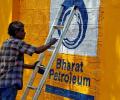
Fitch Ratings on Monday said uncertainty over the bidder consortiums and process complexity, including valuation, may lead to potential delays in privatisation of India's second-largest fuel retailer, Bharat Petroleum Corporation Ltd (BPCL). Affirming BPCL's rating at 'BBB-' with a negative outlook, Fitch said it continues to treat the potential divestment of the company by the Indian government as an event risk. "Bidders are conducting due diligence, but uncertainty over the bidder consortiums and process complexity, including valuation, may lead to potential delays.

10 central trade unions have called a nationwide shutdown against 'anti-worker policies' of the central government. Apart from being successful in Bengal, Kerala and NE states, the bandh has also got support from Cong leader Rahul Gandhi and Shiv Sena in Maharashtra.
Analysts said the higher capex by PSUs, along with government spending, could trigger a capex revival for the corporate sector by the second half of FY17
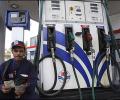
Oil marketing companies on Friday cut petrol price by 32 paise, and diesel by 85 paise a litre with effect from midnight tonight.

The three state-owned oil companies have decided to defer snapping fuel supplies to Air India. The airline owes the three firms over Rs 5,000 crore in past fuel bills.
Officials said there had been no official word or indication from the top yet. The expectation from officials is to do what they can, but it is understood that all fiscal and budgetary targets don't matter anymore.
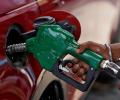
Petrol price on Wednesday touched a new high of Rs 84.45 per litre in the national capital after state-owned fuel retailers hiked prices after a five-day hiatus. Petrol and diesel prices were hiked by 25 paise per litre each, according to a price notification from oil marketing companies. In Delhi, petrol now costs Rs 84.45 per litre and diesel is priced at Rs 74.63. In Mumbai, petrol comes for Rs 91.07 a litre and diesel for Rs 81.34. This is the highest ever price of petrol in Delhi, while diesel is at a record high in Mumbai.
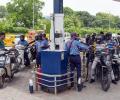
Petrol and diesel price hikes are likely to resume after state elections get over next week to bridge the Rs 9 a litre gap created by international oil prices soaring past $100 a barrel. International crude oil prices shot above $110 a barrel for the first time since mid-2014 on fears that oil and gas supplies from energy giant Russia could be disrupted, either by the conflict in Ukraine or retaliatory western sanctions. The basket of crude oil India buys rose above $102 per barrel on March 1, the highest since August 2014, according to information from the Petroleum Planning and Analysis Cell (PPAC) of the oil ministry.

BPCL gained nearly 4% to Rs 674, while HPCL gained more than 2% to Rs 451.

According to industry experts, the consumption of petroleum products in the month of April was only 30-40 per cent of what it had been prior to the lockdown. Due to this, refineries were forced to bring down their capacity too.

The increase in rates announced by oil firms is excluding state levies and the actual hike will be higher.

Petrol price was on Wednesday hiked by a steep Rs 3.38 per litre and diesel by Rs 2.67 a litre, reversing a two-month declining trend.
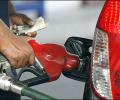
Petrol price was on Monday hiked by Rs 2.19 a litre and diesel by 98 paise per litre.
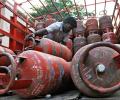
Given that the target was to reach 80.34 million families under PMUY - within three months starting April 1 - the government should have distributed at least 241.02 million cylinders by the end of June. It actually ended up distributing only 119.7 million cylinders.
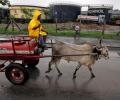
The fuel delivery scheme mainly targets consumers that buy in bulk.
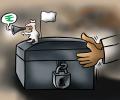
At the same time, the Cabinet approved reducing government's stake in select PSUs such as IOC to below 51 per cent while continuing to retain management control.
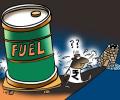
The price of petrol has risen by 83 paise per litre in the past nine days and diesel by 73 paise
OMCs' Digital India move is likely to have an impact on more than 80.3 million Pradhan Mantri Ujjwala Yojana consumers, majority of whom are not exposed to digital transact.

RBML - the joint venture of Reliance Industries Ltd and supermajor BP - has told the government that fuel retailing for the private sector in India has become unsustainable after market-controlling public sector firms frequently froze petrol and diesel prices at rates way below the cost, sources said. Despite a surge in oil prices, state-owned Indian Oil Corporation (IOC), Hindustan Petroleum Corporation Ltd (HPCL) and Bharat Petroleum Corporation Ltd (BPCL) first froze petrol and diesel rates for a record 137 days beginning early November 2021 when five states including Uttar Pradesh went to the polls, and last month again went into a hiatus that is now 47 days old. "They (Reliance BP Mobility Ltd) has written to the petroleum ministry over the fuel pricing issue," a highly placed source in the government, who didn't want to be quoted, told reporters.
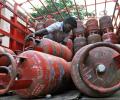
The phased increase of prices is being done to sell the fuel at international prices.
The price of non-subsidised cooking gas (LPG) was on cut by Rs 21 per cylinder and that of jet fuel (ATF) by a steep 3 per cent on the back of falling international oil rates.

Stocks of public sector undertakings (PSUs) have been on fire in the past year as investors cheered an improvement in key operating metrics and embraced counters of these state-owned enterprises, analysts suggest. The S&P BSE PSU Index has gained over 90 per cent in the past year, rising much higher than the S&P BSE Sensex, which has rose nearly 19 per cent during this period, according to ACE Equity data. The BSE PSU Index, reports show, has delivered a compound annual growth rate (CAGR) of 28 per cent (including dividends reinvestments) over five years and risen by almost 60 per cent in the past year.
Richest Indian Mukesh Ambani-led RIL was the top private sector company from the country as it jumped from 203rd rank last year to 148th.

Corporate earnings grew in double digits during the April-June 2022 (Q1FY23) quarter but the momentum waned. Overall corporate earnings in the quarter were down sharply from their highs in FY22. The combined net profit of 2,981 listed companies across sectors in the Business Standard sample was up 22.4 per cent YoY to Rs 2.24 trillion in the June quarter, driven by a big jump in the earnings of banks, non-banking lenders, oil & producers, and FMCG companies. Also, earnings in the corresponding quarter a year ago were affected because of the second wave of the Covid pandemic, even though the numbers were a lot better than Q1FY21 when there was a nationwide lockdown.
A litre of diesel will cost Rs 48.01 compared to Rs 49.31 at present
Estimated to cost $44 billion, the project was expected to be commissioned by 2025.
Vedanta group chairman, Anil Agarwal, 69, is well known for his business journey from a scrap dealer from Bihar to a London-based globe-girdling metal and oil and gas conglomerate with revenues of $19 billion. Now his abilities to keep his group from over-leveraging itself will be put to the test. Over the years, Agarwal, now based in London, set up the conglomerate via acquiring iron ore producer Sesa Goa, Cairn's oil producing assets in India, and Electrosteel Steel.
SpiceJet grounded all its aircraft due to payment woes
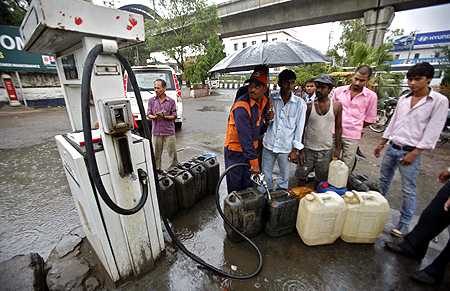
Petrol price was on Saturday cut by Rs 0.50 per litre but there will be no change in rates of diesel.

'2019 was fought on delivery. But in 2024, you can see the before and after effects.'

Videocon Industries on Tuesday said a well drilled to confirm an oil discovery in its Brazilian offshore block has struck 200 feet of high-quality hydrocarbon zone.
